How to Score on Prediction Platforms for Football Fans
How to Score on Prediction Platforms for Football Fans

What makes some football enthusiasts outshine the competition on prediction platforms is their ability to blend deep statistical analysis with sharp football instincts. With platforms now offering tools like machine learning and dynamic data selection, smart predictors know that a strategic setup is the foundation of consistent accuracy. Discover how building a robust prediction profile and harnessing reliable, real-time data can elevate your game and keep you competitive every matchday.
Table of Contents
- Step 1: Set up Your Prediction Profile Strategically
- Step 2: Analyse Match Statistics and Team Form
- Step 3: Make Informed Predictions Using Reliable Data
- Step 4: Track Live Match Developments for Timely Updates
- Step 5: Review Outcomes and Refine Your Prediction Tactics
Quick Summary
| Key Insight | Explanation |
|---|---|
| 1. Configure Your Prediction Profile | Tailor your settings to enhance prediction accuracy by selecting relevant data and preferences. |
| 2. Analyse Match Statistics Thoroughly | Dive into detailed performance metrics beyond win-loss records to uncover valuable insights. |
| 3. Validate Data from Multiple Sources | Cross-reference statistics to ensure reliable predictions, avoiding dependency on a single source. |
| 4. Monitor Live Developments During Matches | Capture real-time events and interpret their impact to adjust predictions effectively. |
| 5. Review and Adapt Post-Match | Use match outcomes to refine prediction tactics and learn from previous analyses for future accuracy. |
Step 1: Set up your prediction profile strategically
Creating a robust prediction profile is your gateway to becoming a strategic football forecaster. The key lies in understanding how to configure your platform settings to maximise accuracy and insights. By carefully selecting your data sources and configuring your profile, you can significantly improve your prediction performance.
Start by examining the platform’s configuration options. Most prediction platforms like strategic soccer prediction tools allow users to input specific parameters that influence prediction models. These typically include historical match data, team performance metrics, player statistics, and recent form indicators. Pay close attention to the depth of statistical information you can incorporate. The more comprehensive your input data, the more refined your prediction algorithm becomes.
Aligning your profile with your specific prediction strategy requires careful customisation. Some platforms offer machine learning algorithms that can adapt to your prediction style over time. Select options that allow you to track your performance, learn from previous predictions, and gradually refine your approach. Consider setting up preferences that match your football knowledge depth and prediction comfort level.
Seasoned Tip: Configure your profile with a balance of statistical rigour and personal football insight to create a truly personalised prediction approach.
Step 2: Analyse match statistics and team form
Diving into match statistics and team form represents the cornerstone of precise football predictions. Your ability to interpret complex performance data can transform basic guesswork into strategic forecasting. Machine learning techniques for football predictions demonstrate how granular analysis can significantly improve prediction accuracy.

Begin by collecting comprehensive data across multiple dimensions. This includes recent team performances, head-to-head match histories, player fitness levels, home and away performance variations, and tactical strategies. Look beyond simple win loss records to understand deeper performance indicators. Examine metrics like possession percentages, shot accuracy, defensive resilience, and player momentum. Some key areas to focus on include goal scoring trends, defensive stability, injury reports, and historical performance under similar match conditions.
Transform your raw data into actionable insights by identifying patterns and trends. Cross reference multiple statistical sources to validate your observations and build a more robust predictive model. Pay attention to subtle shifts in team dynamics, such as recent coaching changes, emerging player talents, or strategic formations that might impact match outcomes.
Seasoned Tip: Create a systematic approach to data collection that balances statistical depth with contextual football intelligence.
Step 3: Make informed predictions using reliable data
Crafting reliable football predictions demands a strategic approach to data selection and interpretation. Your success hinges on accessing and understanding comprehensive, high-quality information that goes beyond surface level statistics. Machine learning football prediction strategies demonstrate how advanced data analysis can transform basic guesswork into precise forecasting.
To build reliable predictions, you must develop a robust data collection framework. Start by identifying authoritative sources that provide verified and timely information. This includes official team websites, professional sports analytics platforms, and reputable statistical databases. Focus on collecting data across multiple dimensions such as player fitness, recent performance trends, tactical formations, historical head-to-head records, and contextual match conditions. Prioritise sources that offer real-time updates and deep statistical insights, allowing you to capture nuanced shifts in team dynamics.
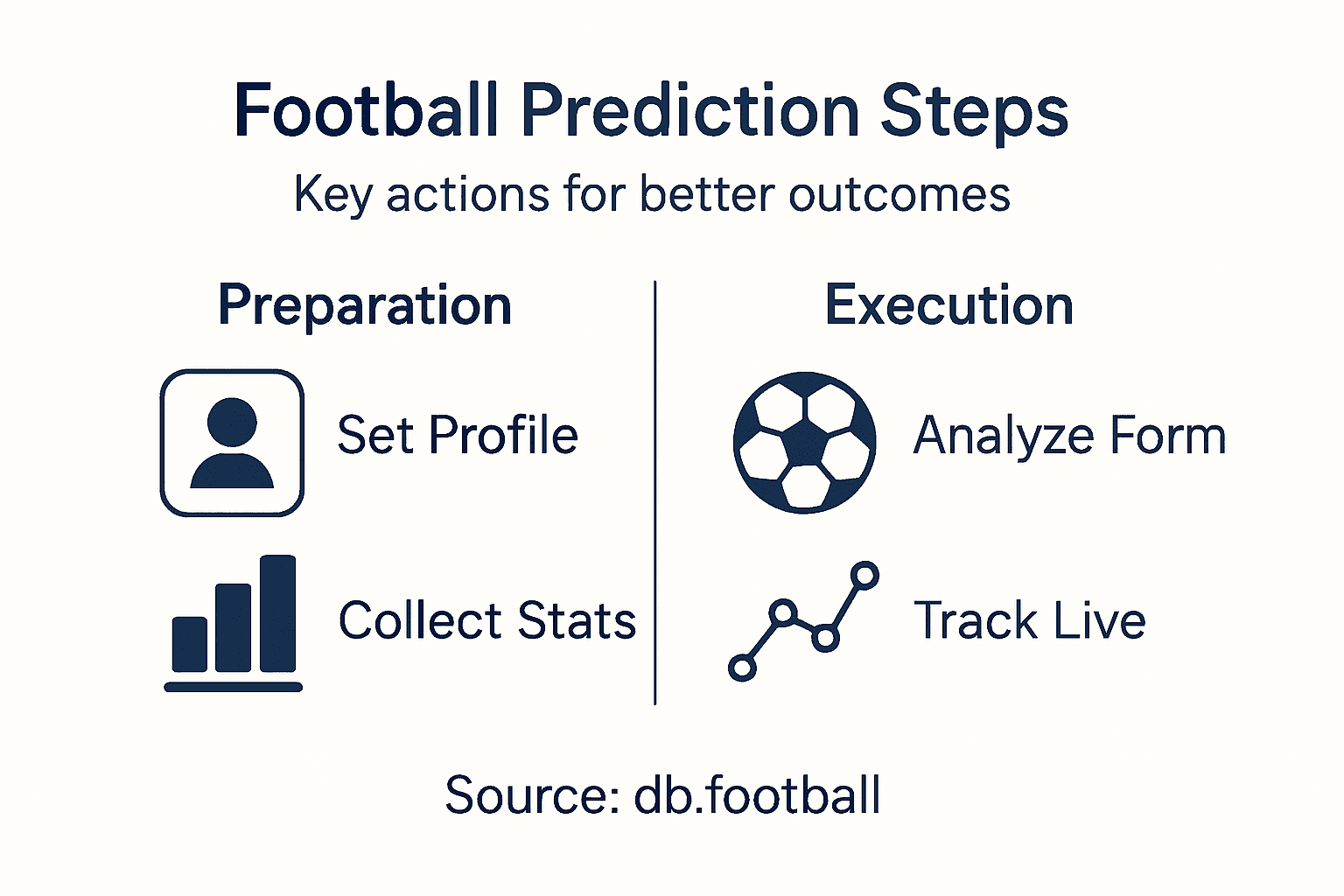
Implement a systematic approach to data validation and cross referencing. Do not rely on a single source, but instead create a comprehensive view by comparing information from multiple reliable platforms. Look for consistencies and discrepancies that might reveal deeper insights about team performance. Pay special attention to emerging patterns, unexpected statistical anomalies, and contextual factors that traditional metrics might overlook.
Here is a summary of key data sources and their relevance for football prediction accuracy:
| Data Source Type | Typical Information Provided | Impact on Prediction Accuracy |
|---|---|---|
| Official Team Sites | Real-time squad details, injuries | High, direct and timely updates |
| Analytics Platforms | Advanced player and match metrics | Medium, deeper statistical analysis |
| Statistical Databases | Historical match data and trends | High, supports long-term strategy |
| Live Streaming Apps | Instant match events, momentum shifts | High, crucial for in-play updates |
Seasoned Tip: Develop a personal data scoring system that weights different information sources based on their historical accuracy and reliability.
Step 4: Track live match developments for timely updates
Staying ahead in football prediction requires real-time awareness and rapid information processing. Your ability to capture and interpret live match developments can dramatically transform your prediction accuracy. Live soccer prediction technologies demonstrate how instant data tracking enables dynamic prediction adjustments during matches.
Develop a systematic approach to monitoring live match events. This means setting up multiple information channels that provide instantaneous updates on critical match dynamics. Focus on tracking key performance indicators such as goals, substitutions, yellow and red cards, player injuries, tactical changes, and momentum shifts. Use dedicated sports apps, official team channels, professional analytics platforms, and real-time streaming services to create a comprehensive monitoring strategy. Prioritise sources that offer granular details beyond basic score updates.
Learn to interpret live data swiftly and strategically. Do not simply react to events but analyse their potential downstream implications for match outcomes. Consider how individual incidents might influence team dynamics, player confidence, and overall match momentum. Be prepared to quickly recalibrate your predictions based on emerging information, understanding that football matches are fluid and dynamic environments where fortunes can change in moments.
Seasoned Tip: Create a personal dashboard that consolidates multiple live data streams to enable rapid strategic decision making.
Step 5: Review outcomes and refine your prediction tactics
Successful football prediction is an ongoing journey of continuous learning and strategic refinement. The most effective predictors understand that every match provides valuable insights to improve future forecasting accuracy. Machine learning prediction models reveal how systematic evaluation can transform initial guesswork into precise predictive strategies.
Establish a rigorous post match analysis routine that goes beyond simply checking whether your prediction was correct. Systematically document the factors that influenced the actual match outcome compared to your initial prediction. Break down your analysis into specific components such as team selection, tactical approach, individual player performances, and unexpected match events. Look for patterns in your prediction errors. Were you consistently overestimating a team’s defensive capabilities? Did you fail to account for recent player transfers or coaching changes? Understanding these nuanced details will help you develop more sophisticated predictive approaches.
Create a personal performance tracking system that allows you to quantify and improve your prediction accuracy over time. Develop a scoring mechanism that not only evaluates correct match results but also considers the precision of your score predictions and your ability to anticipate match dynamics. Regularly review your prediction metrics, identify consistent strengths and weaknesses in your approach, and be willing to adapt your strategies based on empirical evidence.
Use this table to track factors that should be reviewed after each match to refine your prediction tactics:
| Review Category | Example Insights | Application to Future Predictions |
|---|---|---|
| Tactical Approach | Formation changes, pressing style | Adjust for similar future match-ups |
| Player Performance | Key players’ influence, substitutions | Reassess value of individual stats |
| External Factors | Transfers, coaching change, weather | Incorporate new context variables |
| Prediction Error Trend | Surprises, missed patterns | Modify data sourcing and analysis |
Seasoned Tip: Treat each prediction as a learning opportunity and maintain a detailed log of your forecasting journey to continuously enhance your predictive skills.
Elevate Your Football Predictions with Expert Tools and Real-Time Engagement
Mastering football prediction platforms involves overcoming challenges like configuring your profile strategically, analysing complex match statistics, and tracking live match developments with precision. This article highlights the importance of balancing statistical rigour and personal insight, systematically collecting reliable data, and refining tactics through ongoing review. If you are determined to transform guesswork into informed forecasting and want to compete confidently within a community, then utilising a dedicated platform is essential.
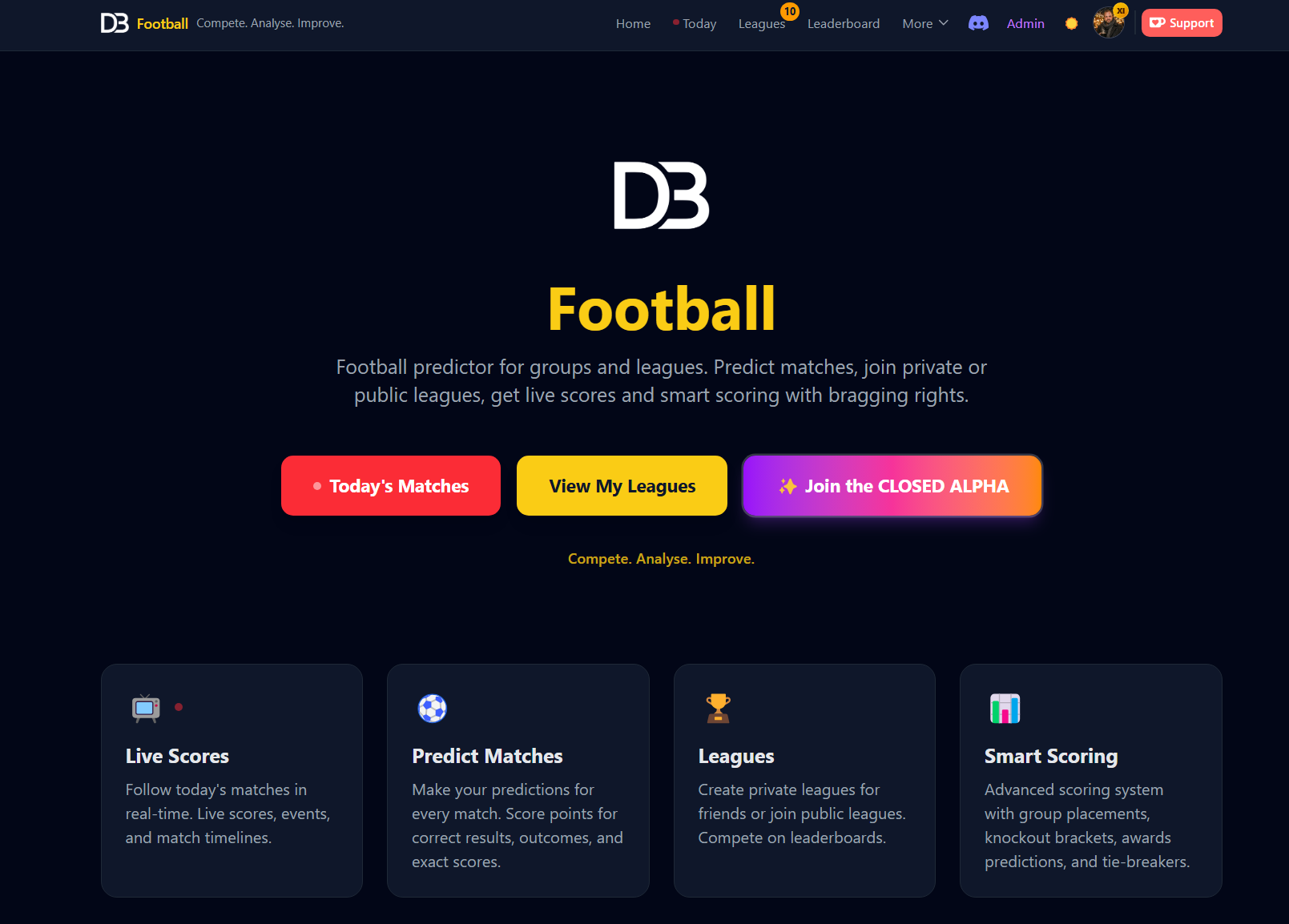
Take control of your prediction journey today by joining db.football where you can create a personalised profile aligned with your knowledge depth, analyse real-time football data, and engage in private or public leagues to challenge friends and global fans. Benefit from the smart scoring system which rewards accuracy on correct outcomes, exact scores, and key match events. Visit https://db.football now to immerse yourself in live scores, match timelines, and a vibrant predictive community. Start refining your strategy with the tools designed for football enthusiasts who want to win and brag about it.
Explore how you can optimise your approach further by visiting our live scoring features and league creation tools for a seamless, competitive experience.
Frequently Asked Questions
How can I set up my prediction profile for football forecasting?
To set up your prediction profile effectively, choose comprehensive data sources and customise your settings to align with your prediction strategy. Start by inputting historical match data, team performance metrics, and player statistics, and refine your approach based on your football knowledge.
What match statistics should I focus on for accurate predictions?
For accurate football predictions, analyse key statistics such as recent team performances, head-to-head records, and player fitness levels. Pay attention to deeper metrics like possession percentages and shot accuracy, as they provide more insights than basic win-loss records.
How do I make informed predictions using reliable data sources?
To make informed predictions, gather data from authoritative and verified sources that provide real-time information. Focus on aspects like player performance, tactical formations, and historical records to create a comprehensive view of each match.
What live match developments should I track during a game?
While a match is ongoing, track critical developments such as goals, substitutions, and any injuries that occur. Set up multiple channels like sports apps or official team sites to ensure you receive timely updates that can influence your predictions.
How can I refine my prediction tactics after each match?
To refine your prediction tactics, conduct a thorough post-match analysis by reviewing the factors that influenced the outcome. Document elements like team selection, tactical decisions, and unexpected events to identify patterns in your predictions and enhance your future forecasting strategies.